Paris Goes To War

War came Paris, Texas on December 7, 1941. The Japanese attack on Pearl Harbor and the subsequent declarations of war of the Axis countries of Japan, Germany and Italy against The United States brought World War II literally to the doorsteps of Paris.

The U.S. response to war hit Paris like a tidal wave and the results were everlasting.

This small East Texas town responded as hundreds of small towns across America did. Its sons, daughters and citizens joined the war effort.

But Paris began to develop its own uniqueness with the opening of Camp Maxey just a few miles north of the city limits in 1942. Two major divisions, the 102d Infantry Division and the 99th Infantry Division, trained there. It is estimated that over 200,000 troops and civilians trained and worked at Camp Maxey during its short 4 years of existance.

Camp Maxey was also selected as a site, as were many other training camp sites in Texas, to house German prisoners-of-war. More than 6,000 Germans were hosted there until well after the last shots of anger were fired in Europe in 1945.

Paris, as was the whole country, was like a stirred pot. The young men and women who came to Camp Maxey to train spent their leaves in town. Many of them met, courted, and married local men and women. Likewise, Paris sons and daughters who left were meeting their future spouses. The long historic ties that had held Paris together as a tight community were stretched around the world.

To and from Paris the letters streamed in and out from friends and families: from the battle fronts, from far-away hometowns, from Washington D.C., to Europe, to The Pacific and literally all points of the globe.

Sad news of soldiers being killed, exciting news of the birth of a new baby, common news about town gossip all swirlled around this small town of Paris. Paris was making its contribution to march the country toward victory.

In 1941 Paris Goes To War.


How To Add A Story & Pictures To Paris Goes To War

If you have stories, pictures or items of interest to contribute to these web pages, please email them to steelyfamilias@yahoo.com. You can send written articles in doc or pdf formats and pictures are preferred in jpg format. Contributions will be posted according the their relevance to Paris, Lamar County, Camp Maxey and World War II. All contributions may be used on these blog web pages as well as any future publications that may appear on the subject.

Thursday, June 2, 2011

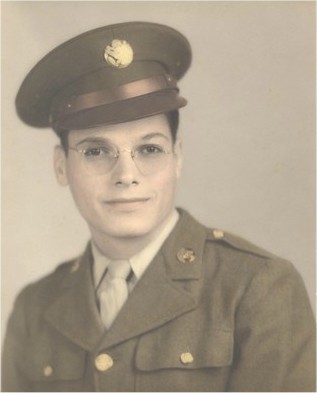
In Memory of Murray Stevens, 99th Infantry Division, 394th Regiment, Co. G

(This article was written in response to a request from a teacher who was teaching a unit about World War II. It is also created for his children and grandchildren so they can know about their father and grandfather. Others are welcome to read.  He passed away June 15, 2012 at the age of 89.)

As an 18 year old I attended Victoria Junior College in Texas. An Army recruiter drove 28 miles from Cuero (KWEH ro) to Victoria and came to see me. He had visited with me many times on previous occasions to try to get me to enlist. I told him I would volunteer when school was out. I wanted to finish my freshman year. He said " The men at the draft board showed me the call-up list and your name was on it." He said if I would volunteer, he would guarantee that I could finish this first year of college.

After the semester was over, in three or four days I got a notice to report to San Antonio. I reported and was inducted into the Army and went to basic training at Camp Maxey near Paris, Texas. I was with my classmates in basic training. It was an enjoyable experience, but after that it was downhill all the way.

After training they put me in ASTP (Army Specialized Training Program). I went back to college at Kilgore in that program. I stayed there one semester. Then we were assigned to a company. A company in the Army is composed of 200 men. Ours was Company E. We would sing a song and at the end of the song we would shout "EEE! EEE!"

Then we went on to another training camp. After basic training they gave us a test. There was a rumor it was about biology. I knew a lot of biology but I thought to myself, "I don't want to be a biologist, I want to be a petroleum engineer.", so I deliberately flunked the test. Biggest mistake I ever made. It nearly cost me my life. The people who did well on the test were sent to school to become doctors because the Army was short on doctors at the time. The rest of us were given a gun and sent to the battlefield.

Years later my wife, Patsy, mentioned a Dr. Torno who was a physician at Pasadena Memorial Hospital. He had been with us in basic training.

After our basic training was over we were loaded onto a ship from a port on the Atlantic coast. We went to England where we stayed for two or three weeks. We were then taken to the front line in Belgium near Krinkelt. It was November and very, very cold. We were in a foxhole. The soldiers who were there before us had dug the foxholes and the trenches.We were in the Hurgen Forest

On Thanksgiving day 1944 we had a Thanksgiving dinner on the front line. The field kitchen crew had set up two tables in a clearing in the forest. There was a big bowl of turkey and dressing and a smaller bowl of other fixings. After we ate they put the tables back at the edge of the forest.

Several days later the Germans starting shooting a cannon out of a small tank. The first shot hit the big bowl that had been left on the table, and the second shot hit the other bowl.

The enemy line was separated from ours by a distance of about 150 yards. The Germans had retreated from their front line during this time until the Battle of the Bulge started on December 16th. The time I was at that front line was during a lull in the battle.

One day I said, "I'm going to look around a bit". So I got out of the foxhole and hid behind a bush. I didn't see anything so I stood up and walked up and down the trench. Then it happened. I saw movement on the other side and a German sniper fired a shot. The bullet pentrated my helmet and I felt it graze my hair. I told the guys in the trench, "Don't look at me or talk to me because I'm going to play dead until it's too dark for the sniper to see me." Then I either passed out or went to sleep. When I woke up it was mid-morning the next day.

I crawled backward . When I dropped in the foxhole I knew my feet were frozen because I had no feeling from the knees down on both legs. My left hand was also frozen, but I could move my trigger finger. I shot left-handed because I don't have vision in my right eye.

The two guys were gone and so was my rifle and my helmet. In fact there was no one in any of the foxholes. They had evacuated the company from the front lines. I waited all day. Then two medics appeared with a stretcher. One of them said, "The soldiers reported a dead GI up here and we have come to get the body." I said, "I must be the body because there's no one here but me." My buddies had thought I was dead and had taken my helmet and rifle.

The medics took off my shoes and pricked my toes with a needle, but I didn't feel anything at all. I was suffering from frostbite. (In the Army at that time they called it "trench foot".) They told me to get on the stretcher. I said, "I can walk." They said," If you don't get on this stretcher, you're going to lose both your feet." Naturally, I got on the stretcher.

I said, "Where is everyone?" The medics said the others were pulled out because they had run out of ammunition. There was a strike at the munitions plant in the United States and they were not producing the ammunition we needed. How could such a thing happen! After that I became an anti-union person.

All these events occurred one or two days before the Battle of the Bulge began. It began in the very place where I had been. One man I talked to later said he had escaped when the battle began because he had gone to the rear line for something. Everyone in his company had been killed or taken prisoner.

The medics took me in a truck to a hospital in a large city which I assumed to be Paris, France. I'm not sure what city it was. They were carrying me on a stretcher and we came to an intersection. Two young girls came by and oohed and ahhed over the soldier on the stretcher. The medics put me on a train.

From there we took a ferry to England. I stayed in the hospital there for quite a while. After my release from the hospital I was walking along the coast of the village and saw a a small ship docked there. Two more soldiers came by. I asked them, "What ship is that? Where's it going?" They said, "We guess it's going back to the U.S."

I got on the ship without talking to anyone. I fell asleep and when I woke up we were out on the ocean. Sure enough, it was going to the U.S. because we landed in New York. From the ship we went to another Army hospital in New York. They were making up a USO tour of New York and asked me if I wanted to see the city. I said, "No, I want to go home."

They put me on a train for a hospital in Carson, Colorado. There were two girls sitting behind me. One of them started drawing a picture of my face.

I received an honorable discharge on July 14, 1945 and returned home to Cuero, Texas. My days in Company G in the 394th Infantry Division, which was a part of the 99th Division, were over. 

LaVerne Blair was the wife of Lt. John Blair of the 102d Infantry Division, Co. I of the 406th Regiment, who was awarded both the Silver and Bronze Star Medals for valor while fighting in Germany.  This is Mrs. Blair's Camp Maxey Entry/Exit Pass issued to her.  She came to Paris to live during her husband's training at the camp and was a civilian employee.

Wednesday, June 1, 2011

Paris Texas Plaza Just Prior To World War II

102nd Infantry Division Dental Officers

In Memory of Pfc First Class Thurman Coker

May 25, 2011\

By AMBER POMPA

Greenville, Texas Herald-Banner Staff

GREENVILLE —The remains of Private First Class Floyd Thurman Coker are finally returning home
after some 60 years. Coker, who grew up in the Quinlan area, died a prisoner of war at the Suan Bean Camp in North Korea at the age of 25. He will arrive at the DFW Airport Friday morning and will be escorted to Paris, Texas by the Patriot Guard Riders.

Services are scheduled for 2 p.m. Sunday at Bright-Holland Funeral Home in Paris. Burial, with full
military honors will follow in Knights of Honor Cemetery.

Coker joined the U.S. Army in 1944. He served at the end of World War II and during the Korean Conflict when he was captured and became a POW Feb. 12, 1951. He died at the camp April 15, 1951.

The family had received reports from other POWs who has been captured and held at the camp who
claimed to have been present when Coker passed, but it wasn’t until 1954 that the military contacted
Ellen Coker to inform her that her son had passed away.

Coker spent nearly 40 years in a mass grave overseas until North Korea released approximately 208
crates containing the remains of more than 400 soldiers.

Through DNA testing, the military identified Coker’s remains in five different crates.

“It definitely gives us a sense of closure,” said Linda Harris about her uncle’s return. “We’re so thankful to the military because they didn’t give up. They could have, but they didn’t. They kept searching until they located them and I think that’s something they should be commended for.”

Jim Harris, 102d Infantry Division, 407th Inf. Regiment, Company K

This is a story of my personal experience in our first major attack in WW2. In 1979 I returned to visit a few of the sights in Europe with a small group of Ozarks. We visited Welz and other war sites for a couple of days, then on to the tourist things like Paris and Switzerland. Paul Wible, a member of L Co. 407, asked me to write the day as I remembered it and he would do the same. His company was almost wiped out in the attack and had a larger number killed than K Co. I was in K Co. and agreed, so this was written for Wible back in 1979, when I could remember more details. This is a copy of what I wrote back in 1979. I can remember most of this even today, and could even add a few details which I will not do, at least not at this time. I received the silver star medal for my actively on this day of Nov. 30, 1979.
Jim Harris, former K 407
.
Ps I was a private that day, was a three stripe Sgt. The next day. Never did make private first class or any other rank.
November 29, 1944
On the evening of Nov. 29, 1944 Company K, 407th Inf. Reg., 102nd Division was settled down in the cellars of a small German village called Ederen. The men of the 2nd Platoon were quite comfortable in their cellar. We had been told that we would push off at 7:30 in the morning to attack the next village Welz. This news did not dampen our spirits as we settled in for the night.
We had been on the line at Ederen for a few days. The German shelling continued off and on day and night. The rattle of machine guns, the soft whoosh and blast from the mortar shells  and the shrill whistle and explosions from the 88s let us know that the war was still to be fought. We all took turns out in the foxholes and standing watch, then we would return to our nice safe cellar.
The afternoon of the 29th we had received several Christmas packages from, home. The home folks had followed instructions and mailed early. The 2nd platoon had more cake, cookies, and candy than we could consume. We also knew that in the morning when we pushed off in the attack that any re-naming goodies that could not be carried must be left behind. That evening we all stuffed ourselves and shared the Christmas packages with everyone; tomorrow we go back to the war.
November 30, 1944
Up very early to prepare for the push-off. Sgt. Cox distributes D bars to everyone. These chocolate ration bars are supposed to be very high in energy; but we only think of the good chocolate. This is a rare treat.
Everyone opens up a breakfast K ration, and soon we can smell the cans of ham & eggs being warmed and the coffee. Burns from Boston comes by and gives us some of his Bolster candy bars which he has received for Christmas, the first one of these candy bars I had ever seen. We all eat well and finish up on all the cake and cookies that we can hold. Grab up our equipment and everyone goes out into the courtyard. A last check to make sure that everyone has a good supply of rifle clips and grenades as we notice that the morning haze holds in the chill of what could be a good clear cool day. No rain is expected.
Now Sgt. Radice, an old army man and now our platoon Sgt., comes up to give us a pep talk. This is our first attack and Sgt. Radice is very loud and uses a lot of profanity as he tells us that when the time comes to push off, we must all move. He paces back and forth as he tells us that anyone lagging behind will be considered a coward and a traitor and could be shot as a deserter. I remember well that his attitude and to implications that some of us would not do our duty disturbed me. We were all there because we had to be; however, we were a very close family and I was sure that we would do what we had to do to the~ last man. Sgt. Radice makes his talk and leaves to go to another platoon.
Sgt. Cox, our squad leader, and asst. squad leader Sgt. Behan come over to tell us the plan. The 2nd and 3rd squads will be on line to move out when the time comes. My squad, the 1st., will be in the center, following in file as reserve. It will be our job to close up any gaps between the first two squads and move up into the line as ordered by Sgt. Cox. 7:30 is getting very close and we are all in the courtyard waiting. Everyone is in full battle gear complete with gas mask, plenty of ammunition, bayonets are fixed, and we wait the word to move out. Artillery and mortar shells fly back and forth overhead; we can hear the rattle of a machine gun now and then, and the explosions can be heard over towards Welz as well as behind us in Ederen as we wait. We do not hear any rifle fire. Shortly before 7:30 Sgt. Cox comes up and tells us that the attack has been delayed. We are given no reasons, and as a private, I expect none. So, we try to relax a little as we wait and think about what lies ahead of us this day.
Everyone is known by their last name in the infantry. As I look around the courtyard at our group, I notice Brown talking softly to Walker; did not know either of them too well. I wondered who would survive this day of the first attack. There was Grotz from Virginia and Bowar from Wisconsin; I had shared a pup tent with Bowar back in Normandy right after we landed. Sitting next to me was Schaible from Elgin, Ill. Schaible was a former ASTP student as I was; we had both been to Purdue. Next to us was Lahti from Detroit, another ASTP student; Lahti had almost been born in Finland. I remembered well the night Lahti and I had spent together in the Finnish section of New York shortly before we left the States. There was McGuire from Eastern Kentucky, not far from my old homestead in West Virginia. We had very similar accents. “Swampy” Madison was from somewhere down in Louisiana, and as the smallest man in the squad, he had the BAR (Browning automatic rifle). Our squad leader Sgt. Cox and asst. squad leader Behan talked quietly together. I noted that our squad was one man short, while the other two squads were full twelve man squads. The morning haze was starting to lift, the air was still chilly, 7:30 had passed, and we all quietly waited. We had time to think and wonder what was holding up the attack. No one explains to an infantry private the plans for anything. All I knew was that soon this morning we would push off in the attack. We wait and wait when finally word comes down to move out--we attack at 10:30. We move out of the courtyard into the village street and move to the East. Only a couple of short blocks to the edge of town facing Welz; the two squads fan out on line preparing to advance while my squad splits up with half of us on each side of the street. The haze has all gone; the morning is crisp and clear; and the barrage from our side starts shortly before 10:30.
The area around and between Ederen and Welz is flat; there is & small valley or draw extending from Ederen to Welz and we start to advance along side of this draw. The cold November air has killed the weeds and dropped the leaves from the few trees, so there is very little cover for the infantryman. Just beyond Welz is a ridge rising to the flat ground beyond towards Linnich. This is our objective for the day.
The Germans have made excellent use of the high ground in their defenses. They have well dug in foxholes, trenches, concealed bunkers and fortifications of all kinds, and they know exactly where we are. The entire area is sprinkled with shell craters. 10:30 and we start to move; there is smoke, explosions of all kinds, artillery shells scream back and forth overhead, machine guns rattle, and now we hear the sharp crack of the rifles as we start towards Welz. As one of the last to leave Ederen with my platoon, I am slightly surprised to see Sgt. Radice still standing against the brick wall of the last building in the village where he is shielded from the barrage coming from Welz. I never see Sgt. Radice again, but heard that a shell exploding in the street got him just after we had pushed out.
The two squads from the platoon on line spread out as they advance which leaves a large gap in the center, which my squad quickly moves to fill. Almost immediately the German shells are landing among us and the tempo picks up as we slowly advance. I find myself on the right side of the draw and have seen no Germans to shoot at. A lone farm house about a couple of hundred feet ahead is hit and begins to burn, spewing out red flames and black smoke. Then just to the left of the burning house I see two soldiers moving about and wonder how these two could hay gotten so far ahead of the rest of us. When they disappear and a machine gun starts to kick up dirt around us, I realize that this is the enemy. Several of us see them and we fire at their location as we advance. They are in a fox hole just a few feet from the burning farmhouse, and when we get close enough McGuire tosses a grenade into the fox hole. The explosion is followed by smoke as something is burning in the fox hole, we advance up to where the foxhole is located.
Two German soldiers emerge from the hole with their hands held high. We notice the SS insignia; Lahti orders them to remove their helmets and move to the rear. It is apparent they either don’t understand or perhaps cannot hear after that grenade explosion; they just stand there and look puzzled. McGuire fires a shot into the ground near them and both drop to their knees. Lahti and I remove their helmets and tell them once more to place their hands on their heads and move to the rear. As they do so I realize that the foxhole must have been L shaped to spare them from the grenade. They were forced out by the burning straw, or whatever was on fire. They were lucky. As the two SS men moved off to the rear I notice that McGuire, Lahti, Schaible and myself are the only ones around, everyone else had vanished. The war is raging all around with shells exploding, machine guns and rifles going off, the farmhouse is burning with crackling flames and dense smoke, screams of shells going both ways overhead, smoke and noise everywhere, and just as soon as the SS men move away from us there are machine gun bullets spraying all around us.
The Germans have waited until the two SS prisoners are out of range and then open up on us. Schaibla and Lahti immediately drop into shell craters in the draw, which is really a small gully. I drop behind a telephone pole on the right side of the draw. The pole has a small concrete foundation about two feet square which extends up about 6 inches, this with the wooden pole provides me with my shelter. Looking to the front I see a hedge row extending out to the left from the draw. There is a small orchard of some kind, just behind the orchard is the first building in Welz. I later find out that this is the brewery. The hedge row takes a 90 degree bend at the head of the draw and extends to my right and behind me off into the distance. Through a gap in the hedge row on my right I see a large flat sugar beet field. McGuire has vanished. Lahti and Schaible are in mud filled shell craters down in the draw, and machine gun bullets splatter all around and splinter the pole and chip the concrete. I spot the machine gunner from the flash of his fire just at the head of the draw in the hedge row. A quick burst from my rifle makes him drop down, but only for a short time.
The German machine gunner pops up now and then firing bursts at Schaible, Lahti and me. My return fire drops him back down into his hole. Schaible yells that his rifle is jammed, and he is in a nice shell crater of water and mud. I tell him to get out while I pin the machine gunner down and he quickly does so. Now I have an M1 grenade launcher with me which I think will be a great help in getting a grenade up to  the machine gunner. I carefully put in the special bullet, attach the grenade to the launcher, aim for a nice loop of the grenade, pull the pin and fire. The grenade takes off and lands very close to the machine gun but does not explode. I am rewarded by a nice burst of machine gun fire. I try one more grenade with the launcher with similar results.
Now Lahti yells that his rifle is also jammed. I notice that his mud and water filled shell crater looks just like the one Schaible was in. A few bursts of fire from my rifle cover Lahti while he gets out of there. Apparently this leaves me all alone up on the edge of the draw lying behind my pole, and the game continues between me and the machine gunner. He fires a burst until my bullets drive him back down into his foxhole. Then to my right I noticed a German soldier run across the gap in the hedge row and drop into a foxhole out in the sugar beet field. Then another, but I get a shot at this one. I decide that I must concentrate on the machine gun, so I take very careful aim at the spot where his black helmet has been popping up. I am very gently squeezing off a shot when that bulls eye pops up into my rifle sights. He does not bother me any more.
Now there is a fairly steady stream of Germans running across the gap in the hedge row. I manage to get one or two shots off at each one, but never know if I had hit one or not. They are moving slightly away from me as they crouch and run by the narrow gap. Then for several minutes there are no more, and I realize that no one is shooting at me. I decide to go up to the machine gun location, so I drop over into the draw and can no longer see the gap in the hedge row on my right. Keeping my rifle ready I slowly move up on all fours to where I can and do toss a grenade into the machine gunners hole. After the explosion I move up and see a dead SS gunner on top of his machine gun which has fallen into the hole. I am now concealed in the hedge row right at the head of the draw.
An American tank is advancing on my right through the sugar beet field, firing as he moves. I do not see any of the German soldiers but notice several apparent foxholes in the field. To my front and left is an apple orchard bordered by the hedge row. To my front near the wall of the brewery is a bunker made partly of logs. Shells or bombs have blown part of the earth cover away and exposed the logs. The sounds, of battle are all around but I now have no targets. From behind and to my left another American tank is moving up on Welz; he is using both machine gun and shell fire as he advances towards the brewery.
I decide to move over to where the German foxholes are located in the sugar beet field and drop a few grenades on them. The tank is still moving way over in the field and he keeps pumping out the shells and machine gun bullets. I creep down the hedge row to where I can lob a grenade into the closest foxhole without missing; pull the pin, count two and let it go directly into the first hole where it goes off with a muffled explosion. The advancing tank is now drawing heavy German shellfire and I am glad it is way over there. I crawl over to the next. foxhole and repeat the grenade toss. Still no Germans to be seen, so I crawl over to the next and repeat the toss once more. Now I am at the gap in the hedge row and can see over towards where I was at on the edge of the draw with my friendly telephone pole. There are two German soldiers lying just beyond the gap where they have fallen, they do not move. I carefully watch them closely for a few minutes and count my grenades. I have three left.
The tank in the sugar beet field has been hit and is smoking, it must be a good 500 yards from where I am lying. The other tank has now reached the hedge row at the orchard and is firing towards the log bunker and the brewery. Then I think I hear someone call my name. Looking through the hedge row gap over to the left of the draw I can see someone waving his arm in the signal to assemble; he yells my name and I can barely hear him. I recognize it as Sgt. Cox, then he disappears.

The battle is then still going on all around. Shells screaming overhead and exploding here and there. Machine guns rattling on the right and left and also from the tank. Smoke is everywhere. I look out into the beet field and can see several more foxholes; but I have only three more grenades. I think at the time, if only a couple of the guys would come over and help me then we could clean out the whole field. But there is no one to help, so I throw one more grenade at the closest fox hole and see it drop in and explode. Then I work my way back to the hedge row gap, go through over into the draw; and move through it toward where I saw Sgt. Cox.

As I get closer to where Sgt. Cox was seen, he appears from concealment  and proceeds to raise a little hell. “Where have you been? What are you trying to do? We have been trying to find you!” he tells me that we have been relieved by the outfit with the tanks, part of the 2nd armored division.

I remember thinking that it was nice to have the 2nd Armored Div. come up to help; however I didn’t think we had been doing too bad. It is now late afternoon and our platoon was meeting in the cellar of a house over on the edge of Welz. Apparently we had lost approximately half of our people and I had not seen anyone get hit.

We proceeded to move on through the village and dug in on the high ground just to the left of the main road. We dug in with three man fox holes looking out towards the flat sugar beet fields towards where the Germans still held Rurdorf and Linnich on the western bank of the Rur river. We finished digging in just as darkness began to cover the land. I had time to eat one of those D ration chocolate bars and think about what had happened that day. We had paid dearly for those few yards of ground; and the odds were not in my favor. At that point I realized that sooner or later it would be my turn; I only hoped for the million—dollar wound, the nice clean bullet in the arm or leg.

As I took my turn at watch, the war continued. A few shells went back and forth overhead. The chatter of machine guns could be heard and the tracer bullets could be seen. Bed check Charley, the recon. plane buzzed overhead. We did not know what would take place tomorrow, we only knew that the war was a long way from being over. At midnight it was now December 1st and time to wake up the man for the next watch.

Tuesday, May 31, 2011

In Memory of Rev. John M. Shuler, Chaplain, U.S. Army Air Corps

Rev. John M. Shuler, 92, of Paris, TX died at 11:30 AM, Saturday, March 22, 2008 in Paris. Funeral services are set for 11:00 AM, Tuesday, March 25, 2008 at the New World United Methodist Church in Garland.

Rev. Shuler was born February 4, 1916 in New Market, TN to P.L. and Alma Wills Shuler. He graduated from New Castle High School and the seminary of Southern Methodist University. Rev. Shuler married Leora "Skip" Thronburg on February 7, 1934 in Tulsa, OK. She died May 6, 2006.

After graduation from the seminary, Rev. Shuler was assigned to the Cuthand circuit, then to Calvary Methodist Church in Paris. During World War II, he attended chaplain training at Harvard University and served as chaplain for the 507 Fighter Group of the US Army Air Corps. Upon his return home from the war, he served as minister at Lakewood Methodist Church in Dallas eventually assigned to the First Methodist Church of Paris.

Rev. Shuler was the assistant executive director of Goodwill Industries for the next two years. He then returned to the ministry as minister of the Cockrell Hill Methodist Church in Dallas retiring from the Casa Linda Methodist Church. After his retirement, he was asked to fill-in as the pastor at College Mound Methodist Church and stayed for three years.

Rev. Shuler is survived by his daughter, Linda K. Swaim and husband, Freddy of Paris; six grandchildren, John Emory Shuler and wife, Staci of Gilmer, Jeri Lynn Brown and husband, Jeff of Whitehouse, Kelly Ann Swaim of Burgin, Kentucky, Tracy Leigh Schweizer and husband, Ben of Tyler, Robert L. Swaim, IV of Paris, and Frederick "Ricky" Swaim, II of Paris; seven great-grandchildren, Sunni Ann Shuler, Leora Shuler, Blake Bolton, Elizabeth Bolton, Drew Brown, Lydia Schweizer, and Zachary Swaim; one brother, Phil Shuler of Temple; and one sister, Helen French of Round Rock. He was preceded in death by his parents; his son, James C. Shuler; and two brothers, James Shuler and Bob Shuler. Pallbearers will be Glenn Martin, Jeff Paige, Les Shuler, Gerald Lancaster, Tony Harris, and Tommy Townsend.

Honorary pallbearers are members of the 507 Fighter Group of the US Army Air Corps, Rev. Ken Shamblin, Rev. Gene Wisdom, and Rev. Ben Shinn. Memorials may be made to the Haiti Missions, 118 Courtland, Rockford, Michigan 49341. Online condolences may be made to the Shuler family by visiting www.fry-gibbs.com.