Paris Goes To War

War came Paris, Texas on December 7, 1941. The Japanese attack on Pearl Harbor and the subsequent declarations of war of the Axis countries of Japan, Germany and Italy against The United States brought World War II literally to the doorsteps of Paris.

The U.S. response to war hit Paris like a tidal wave and the results were everlasting.

This small East Texas town responded as hundreds of small towns across America did. Its sons, daughters and citizens joined the war effort.

But Paris began to develop its own uniqueness with the opening of Camp Maxey just a few miles north of the city limits in 1942. Two major divisions, the 102d Infantry Division and the 99th Infantry Division, trained there. It is estimated that over 200,000 troops and civilians trained and worked at Camp Maxey during its short 4 years of existance.

Camp Maxey was also selected as a site, as were many other training camp sites in Texas, to house German prisoners-of-war. More than 6,000 Germans were hosted there until well after the last shots of anger were fired in Europe in 1945.

Paris, as was the whole country, was like a stirred pot. The young men and women who came to Camp Maxey to train spent their leaves in town. Many of them met, courted, and married local men and women. Likewise, Paris sons and daughters who left were meeting their future spouses. The long historic ties that had held Paris together as a tight community were stretched around the world.

To and from Paris the letters streamed in and out from friends and families: from the battle fronts, from far-away hometowns, from Washington D.C., to Europe, to The Pacific and literally all points of the globe.

Sad news of soldiers being killed, exciting news of the birth of a new baby, common news about town gossip all swirlled around this small town of Paris. Paris was making its contribution to march the country toward victory.

In 1941 Paris Goes To War.


How To Add A Story & Pictures To Paris Goes To War

If you have stories, pictures or items of interest to contribute to these web pages, please email them to steelyfamilias@yahoo.com. You can send written articles in doc or pdf formats and pictures are preferred in jpg format. Contributions will be posted according the their relevance to Paris, Lamar County, Camp Maxey and World War II. All contributions may be used on these blog web pages as well as any future publications that may appear on the subject.

Wednesday, July 11, 2018

In Memory of Pvt. Clayton Richard, KIA 1944, 102d Infantry Division


July 10, 2018

Purple Hearts Reunited

GRAND RAPIDS, Mich. - Relatives of three dead U.S. serviceman gathered at the Gerald R. Ford Presidential Museum on Tuesday evening to get the lost Purple Heart medals that their loved ones earned during World War II.

Organized by Purple Hearts Reunited, the medals were awarded to three people. One of them was Staff Sgt. Marinum Gillesse, who was wounded by a sniper in the shoulder on Feb. 26, 1944. He died in 2003 after working as an attendance officer with Grand Rapids Public Schools following his time in the Army. Gillesse's brother, William Gillesse, received the medal.

Pvt. James Nameth Jr. was also awarded a Purple Heart. He was killed in action during World War II in the Philippines. He was 19 years old when he died. His niece, Michele McNulty, received his medal.

Pvt. Clayton Richard was also honored with a Purple Heart. He was killed in 1944 in Germany as he served in the 102nd Infantry Division. Richard's nephew, Dennis Richard, accepted the medal.

Since 2012, Purple Hearts Reunited has returned over 450 lost medals.  Purple Hearts Reunited was established in Vermont on July 23, 2012.  As a registered 501 (c)(3) nonprofit foundation, Purple Hearts Reunited is the only organization in the country returning lost or stolen medals to veterans and military families at no cost. Purple Hearts Reunited spends a considerable amount of time researching and locating the original recipient or family and, when possible, conducts a “Return Ceremony” to reunite the veteran or family with the medal. To date, Purple Hearts Reunited has returned the service medals of more than 200 veterans and is currently working on over 300 lost medals that need a home.  In the case that a veteran or family cannot be found, a home of honor is located for the medal, such as a military museum.  Purple Hearts Reunited also takes time to enroll these heroes into the Purple Heart Hall of Honor and has successfully enrolled over 1500 recipients.


In Memory of Ewald Zurbuchen, Troop E 32nd Cavalry Reconnaissance Squadron, Trained At Camp Maxey


Ewald Zurbuchen
1922 - 2017

Ewald was born April 23, 1922 in Chester, WI the son of Gottfried and Anna Zurbuchen. Ewald worked on the family farm and cheese factory before entering the military on November 3, 1942 and serving in the U.S. Army until November 1, 1945. On February 15, 1944 he married Florence (Vant Hoff) Zurbuchen in Paris, TX. Ewald (T/5) was a member of Troop E of the 32nd Cavalry Reconnaissance Squadron with training in Camp Maxey, Texas. He drove truck and half track while serving in campaigns in Central Europe, Rhineland, Ardennes, and the Aleutians. He served under General Patton. He fought in the Battle of the Bulge and defended the famous Ludendorff Bridge at Remagen, the last bridge over the Rhine River.

The 14th Cavalry consisted of the 18th and 32nd Cavalry Reconnaissance Squadrons. It was deployed in defensive positions astride an avenue of approach flowing directly from the German border into the Belgium Ardennes Forest.

The primary reason the cavalry group was employed in this defensive mission was the size of the VIII Corps front.  VIII Corps was deployed in what was considered a quiet sector of the First Army. Generally it was considered one of the areas least likely for German offensive action due to the general low estimate of the German's military capability, and particularly, due to the rugged forest and mountainous terrain. For these reasons, VIII Corps was defending a 145 kilometer front with only four divisions, three times what doctrine prescribed for a force of this size.  Due to the size of the sector, the corps commander was forced to utilize his cavalry group in a defensive mission to ensure all avenues of approach were covered and to stayed tied into V Corps on his left.  Thus on the eve of the infamous German counteroffensive, known as "The Battle of the Bulge," VIII Corps had deployed its elements from left to right: 14th Cavalry Group, 106th Infantry Division; 28th Infantry Division; 9th Armored Division (minus), and 4th Infantry Division. The corps held out the reserve combat command of the 9th Armored Division as the corps reserve.

The 14th Cavalry was commanded by Colonel Mark Devine, and had previously been involved in the siege of Brest. On the eve of the German Ardennes offensive it was deployed with one squadron, the 18th CRS, commanded by LTC Bill Damon, occupying defensive positions over a frontage approximately 7 miles.  Each of its two cavalry troops occupied a series of platoon strong points (the third troop, Troop B, was detached to the 106th Infantry Division). An attached tank destroyer company, Company A, 820th Tank Destroyer Battalion, was concentrated in the northern portion of the squadron sector. Squadron headquarters, as well as Troops E and F, were located in the town of Manderfeld. The 18th CRS had been in position since October, most of that time attached to the veteran 2d Infantry Division. The group headquarters had assumed control of the area only on 11 December. The other squadron, the 32nd CRS, commanded by LTC Paul Ridge was located in the vicinity of Vielsalm, 20 miles to the rear of group headquarters, and was in the process of conducting refitting operations. Its mission was group reserve.


Tuesday, July 3, 2018

In Memory of Jack Leroy Yount, Battery C, 371st Field Artillery Battalion, 99th Infantry Division, Trained at Camp Maxey


JACK L. YOUNT
Battery C, 371st Field Artillery Battalion
1918-2017

Jack Leroy Yount, 98, of Surprise, AZ passed away April 7, 2017. Jack was born September 23, 1918 in Oklahoma City, Oklahoma to Edgar and Mary Yount. He lived in Oklahoma until relocating to Charlotte, NC. Throughout his life he found his love for nature and landscape in locations where he visited and lived. He especially loved to share his memories of living near or visiting various mountain ranges, oceans and desert landscapes. Arizona is the special place that he enjoyed living for the remainder of his life with his wife, children and friends. Jack’s church memberships included First Baptist Church of Del City, First Baptist Church of Oklahoma City and First Baptist Church of Charlotte, NC.

Jack proudly entered the United States Army on October 16, 1940. He was part of the 99th Division, Battery « C », 371st F.A. During his service, he was stationed across the country: Fort Sill, Oklahoma, San Louis Obispo, California, Fort Ord, California, Camp Van Dorn, Mississippi, Camp Maxey, Texas, and in Europe: France, Belgium and Germany. During his WWII service, he received 3 Bronze Battle Stars (Rhineland, Ardennes and Central Europe). After returning from war, he began his lifelong career in retail management.

Jack married the love of his life and best friend, Jeanette (Jean) Pliley in Oklahoma City. They would have celebrated their 66th anniversary on November 4th. 

He is survived by his wife, Jean, daughter Carol Melton (Raymond) of Peoria, AZ, son Raymond Lingo (Joan) of Surprise, AZ; relatives Linda Carroll (David) of Broken Arrow, OK, Jackie Lee Stawitz of Broken Arrow, OK, Elizabeth White of Morganton, NC, Jimmy Yount of Newcastle, OK, Joe Yount of Edmond, OK and Lynn Meredith (Maria) of University Park, FL.

In Memory of Carlos M Jaime, G Company, 393rd Infantry Regiment, 99th Infantry Division, Trained at Camp Maxey


CARLOS M JAIME 


Carlos Martinez Jaime passed away on March 8, 2017 in Vallejo, California, where he resided for the last 57 years. Carlos was born in Aguascalientes City, Aguascalientes, Mexico on November 20, 1925 and immigrated to the United States with his parents and three siblings in 1926.

While a senior at Argentine High School in Kansas City, KS, he petitioned the Draft Board, volunteering for the Army Air Corp Program, but was denied due to his non-citizen status. He was subsequently drafted into wartime service in December of 1943. He attended boot camp and artillery training at Camp Callan in La Jolla, CA. Carlos was awarded his citizenship on April 21, 1944, prior to reassignment to Camp Maxey-Paris, TX for Infantry Training School

Upon completion, he was assigned to Company G of the 393rd Infantry and fought his way to VE Day. Following his service in World War II, he returned to his family in Kansas City to complete his high school education and then to work for the Santa Fe Railroad. It was in Leavenworth, KS where he met his future wife, Maria Molinar. 

He relocated to California for employment at Mare Island Naval Shipyard and completed his inside machinist apprenticeship, Shop 31. Carlos was promoted to a Nuclear Inspector, Nuclear Inspection Department and eventually retired as a Nuclear Planner and Estimator after nearly 30 years of government civil service. Carlos loved all sports and especially loved attending his grandchildren’s sporting and special events. He is survived by his wife, Maria; his children, Margo, Ana, Mario, Luis, Jorge; 12 grandchildren, nine great-grandchildren; many nephews and nieces that he loved dearly.

(courtesy Mario O. Jaime) http://www.miaproject.net/lest-we-forget/

Monday, July 2, 2018

In Memory of PFC Walter A Peard, K Company, 395th Infantry Regiment, 99th Infantry Division, Trained at Camp Maxey


From the book, The Fighting Men of Oklahoma:

Pfc Peard, son of Mr. & Mrs. John J. Peard, was born Sept 5, 1923 at Drumright OK and attended Maud and Dundee HS and the Univ. of Oklahoma. 

He was inducted into the service at Healdton OK on Dec. 7, 1942 and received his training at Camp Maxey TX. 

Peard served in the ETO and Mediterranean with the 99th Div., 395th Regt., and participated in the battles of the Ardennes, Rhineland and Central Europe. 

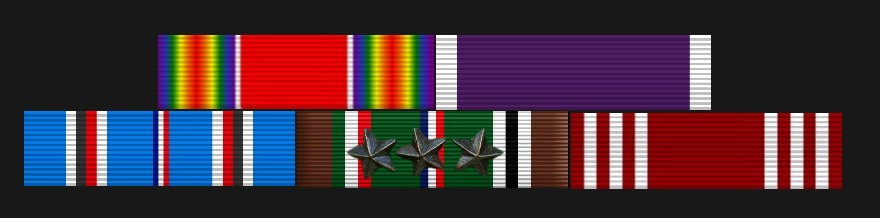
He received his discharge Dec. 17, 1945 and was awarded the American Theater Medal, EAME Campaign Medal w/3 Battle Stars, Victory Medal, Combat Inf. Badge, Good Conduct Medal and the Presidential Citation.


Friday, June 29, 2018

793d Military Police Service Battalion Activated At Camp Maxey, 1942


793d Military Police Battalion

The Battalion was activated at Camp Maxey, Texas, on 26 December 1942.  The battalion deployed to Scotland in February 1944 for training prior to movement to France in August 1944, where it conducted route security operations on the famous Red Ball Highway/Red Ball Express until December 1944. 

From December 1944 to June 1945 the battalion conducted port security operations in Antwerp, Belgium, and was cited in the Order of the Day by the Belgian Army. In June 1945, the battalion was assigned port security operations in Marseilles, France until January 1946, when it entered Germany. 

The battalion was subsequently assigned to the 1st Infantry Division, and moved to Nuremberg, Germany where it conducted law and order operations as part of the occupation force and security for the Nuremberg Trials which was charging the remaining high-ranking Nazis for war crimes. The 793rd Military Police Battalion was awarded the Meritorious Unit Commendation—EUROPEAN THEATER and campaign streamers—NORTHERN FRANCE 1944 and RHINELAND 1944–1945, for military operations in Europe during World War II.  Cited in the Order of the Day of the Belgian Army for action at Antwerp
World War II: Northern France, Rhineland

Tuesday, June 26, 2018

In Memory of William Lake, 99th Infantry Division, Trained at Camp Maxey


William C.Lake, 81, died on Thursday, June 1, 2006 after a long struggle with lung disease. He was born April 7, 1925 in Arkansas City, Kansas to Cecile and Clyde Lake.

He grew up in Pawhuska and after graduation from Pawhuska High School in 1943 he was drafted into the Army and joined the Army Specialized Training Program. He took basic training in Ft. Benning, Georgia and was assigned to Arkansas State College in Jonesboro, Arkansas. 

In 1944 the ASTP program was abandoned and these men were used to fill out the depleted infantry divisions of World War II. Many of the ASTP personnel, including Bill, were sent to Camp Maxey, Texas for advanced training with the 99th Infantry Division before being sent overseas.

In September 1944 the Division arrived at LeHavre three months after the "D Day" invasion. Men and Equipment were trucked across France into Belgium where they moved to the front line. The front was fairly quiet until December 16th when the Germans launched a massive attack, the Battle of the Bulge. After artillery and infantry assaults into their line positions the 99th Division withdrew to Elsenborn Ridge, which was held for many weeks in spite of recurring German attacks. Months later 99th Division troops crossed the Rhine River and fought their way into Germany until the surrender in May 1945. Bill's memories of these experiences were recounted in his wartime memoirs. He enjoyed attending 99th Division reunions and renewing friendships with wartime buddies.

He returned to the U.S. in February 1946 and enrolled in the summer session of the University of Michigan before transferring to O.U. in the fall. He joined Sigma Alpha Epsilon fraternity and was admitted to Phi Beta Kappa and Pe-et honorary societies. He received degrees in mathematics and chemical engineering. In the fall of 1950 he enrolled at M.I.T. where he received an M.S. degree in chemical engineering.

His first job was with Stanolind Oil and Gas Company in Tulsa where he remained until 1969, working both at the Research Center and at the downtown office where he was involved in Operations Research.

In 1969 he and a partner, Charles Dees, formed Computing and Information Sciences Corp. CISCO became a processor of bank credit cards primarily generated from oil companies. CISCO later established branches in Atlanta and San Francisco. In 1978 the company was purchased by First National Bank of Atlanta, and later by National Data Corporation.

In 1982 Bill, with a group of investors, started Western Information Systems which began computerizing Oklahoma county land records for use in the oil and gas industry. This business was discontinued in 1986 following the slump in energy prices.

In the mid 1980's Bill began writing a computer-based Market Price System to analyze the price of stocks, commodities and other free market entities. He continued working in this project until health problems led to his retirement in 2001.

He is survived by his wife of 48 years, Ann Henry Lake; his children: Elizabeth and Manuel Rodriguez of Denver, CO; Susan Marie Lake of San Francisco, CA; Stephen W. and Leslie Lake of Tulsa; Grandchildren: Lauren and Catherine Rodriguez, Alexis and Jocelyn Lake; his nephew: David Howell of Dallas, TX. Preceded in death by his sister: Helene Lake Howell.